

8 Ways to Beat Stress
Introduction
While stress may be an inevitable part of life, how we respond to it and what we do to de-escalate it in our lives is up to us. As someone with auto-immune disease, I have to be particularly conscious of how stress affects my life as its impact show up rather quickly in my body if I don’t take action to handle it. This has empowered me to educate myself on ways to reduce stress by mixing traditional methods with attentive self-care and lifestyle medicine techniques. I am excited to share with you some of my favorite ways to reduce stress and life a happier and healthier daily life.
Why try to beat stress?
There are many answers to this question, but the first one that comes to mind is because you deserve it! Living with less stress and developing ways to manage our stress when it comes is a process of personal liberation.
Beating our stress also reduces pressure on our nervous systems and frees up mental and emotional capacity for us to dedicate to things we actually care about and things that can help us advance our lives forward.
Effects of stress on health
While stress doesn’t effect all of us in the same way, it is known to take a toll on a number of our bodies’ systems as well as our mental clarity. As someone with autoimmunity, I have experienced first hand numerous occasions during which accumulated stress caused my symptoms to flare, resulting in acute joint pain, brain fog, and headaches. I have found that recovering from the setbacks of these flares is more challenging than the work it takes to keep my stress from reaching that level in the first place, but sometimes we do not have control over the circumstances causing us stress.
Many people might not experience these same impacts from stress, but it is likely that we all experience some impacts. The American Psychological Association reports that chronic or long-term stress can have negative effects on our musculoskeletal system, our respiratory system, cardiovascular system, endocrine system (hormones), gastrointestinal system (gut & stomach), nervous system, and our reproductive systems.
All to say, being intentional about reducing our stress is a positive investment in our long term health and wellbeing. I invite you to read through these tips and hope that a couple of them stand out to you as things you can apply and integrate into your life with ease, to live happier and healthier in your day-to-day.
breathing exercise
A simple breathing exercise may be the most tried-and-true way to reduce stress in the moment, while also being the method that may solicit the quickest eye-roll in our modern fast-paced societies. It is one of the most tried-and-true methods because our breath is a precise way for us to communicate directly with our nervous systems. Taking a moment to deepen and slow down our breathing, even for just 5-7 rounds of breath, tricks our body into thinking we are in a relaxed state, even when we may not be, and this helps facilitate actually arriving to that more relaxed state.
For a simple breathing exercise to reduce stress, you can try slowing down and deepening your breath slightly by breathing in while counting to 5 and breathing out while counting to 7. Try this for five full rounds of breath (five inhales and five exhales). If it goes well and isn’t too hard, try it for two more rounds of breath to make seven in total (seven inhales and seven exhales). After completing this exercise, return to your natural way of breathing and observe how you feel, mentally, emotionally, and physically. If you notice a slight, subtle sense of calmness, try to stay in contact with that calm while you carry on with your day.

2. movement practice
Since many socieites and cultures have a hard time really discussing the roots of our stress, it makes sense that we have to do a little of our own digging and research to learn that stress is stored in the body. While coming to understand this can feel daunting, it can also be empowering to learn that moving our bodies regularly can help us release toxic stress we are storing inside ourseleves.
Getting moving not only helps us release stress and tension from our bodies but it is also one of the most basic things we can do to generally boost our health and wellness. I leave this tip open as “movement practice” because all kinds of movement can help us release stress. Some of my favorite movement practices include my spin class, taking walks, doing ten minutes of yoga a day, and light gardening. Other days, the best thing I can do for my body and mindset is just to turn on a couple songs I love and dance around the house until my system has reset.
The best part about this tip is that whatever movement practice aligns most with your personal life and rhythm holds the potential to help you reduce stress in your body and mind. This could be playing a specific sport, going to exercise at a gym, taking a dance class, hiking, swimming, or really anything that gets your blood flowing and your body moving.
It helps to think of our movement practices as sacred spaces, time that we intentionally dedicate to activities that help us live more embodied, less stressful lives, by moving tension through and out of us. While it is ideal to get moving a little bit each day, any amount of movement practice is beneficial and can serve as a preventive measure against stagnant stress and tension in the body and mind.
3. sleep hygiene
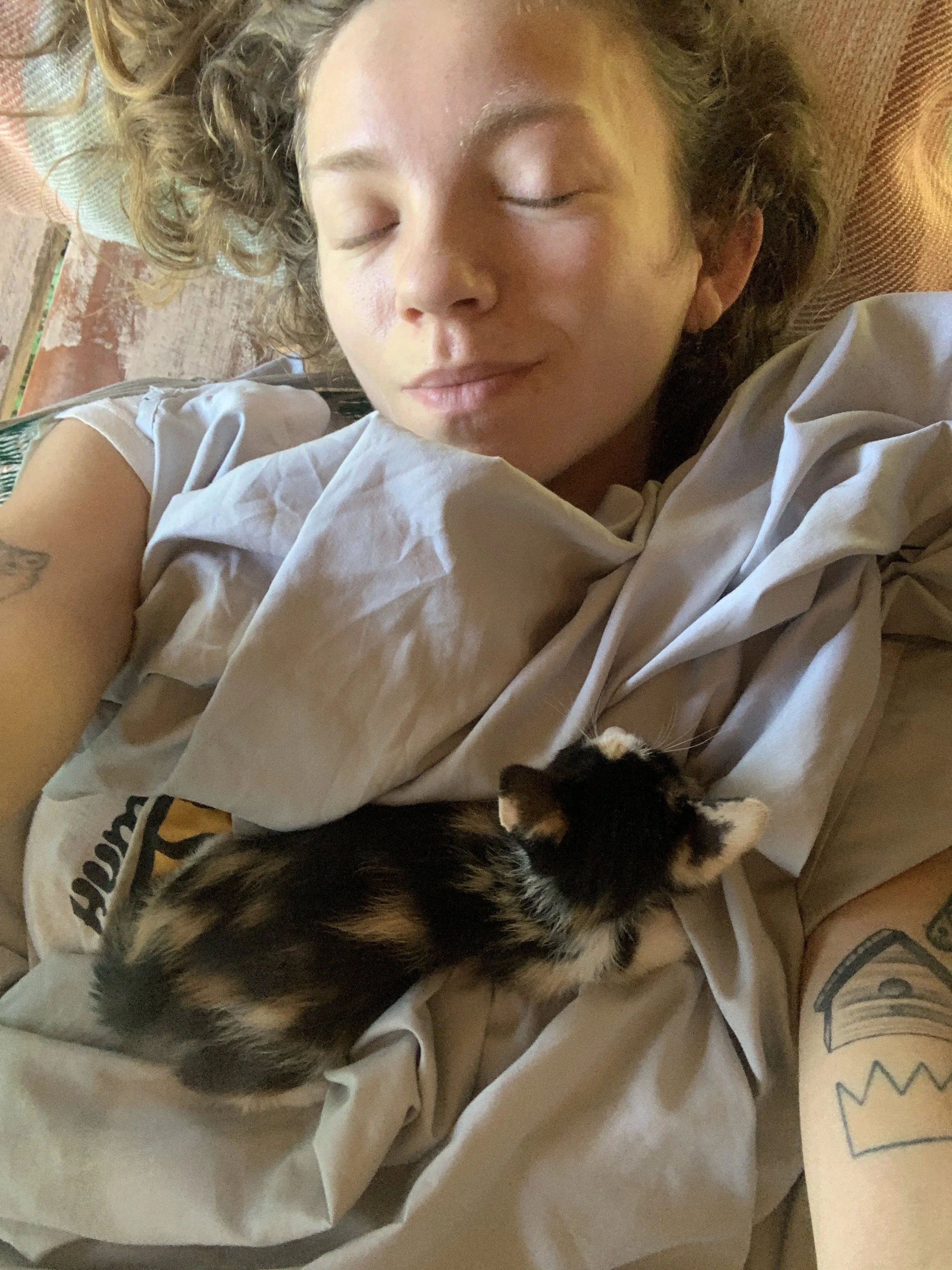
This may sound like an obvious one, but sleep hygiene is crucial to beating stress in our daily lives. As the world becomes increasingly accelerated and production-oriented, more of us become chronically under-slept. Many different factors influence our sleep-life including our families, work schedules, and all the other responsibilities that demand our attention. All of these things can emerge to feel like “too much” or begin to cause feelings of overwhelm or burnout, which end up culminating in … you guessed it… more stress.
That said, setting a firm bedtime for ourselves and honoring that routine for our own wellbeing is a radical act of self-care. Choosing to carve out and demand the space and time you need to truly rest and restore yourself requires resisting many pressures and temptations from everything else to keep going, keep working, keep performing care tasks, and keep producing. Deciding on giving yourself what you need in regards to sleep hygiene can often feel selfish, especially for women, as our social conditioning tells us we should care for others first, all others, and then ourselves. But when the care for others is never-ending, if we do not take action and decidely shift that focus to ourselves, at some point we won’t be able to continue providing others the quality of care that we desire to give.
Nonetheless, there is more to sleep hygiene than a strict bedtime. It could be that the inevitable variables of life keep us from getting to bed at that ideal hour every day, but that doesn’t mean we cannot take action to improve the quality of the sleep we get, regardless of if it’s not quite enough or just the right amount.
Simple tips for improving your quality of sleep include:
avoiding screens (including phones and TV) an hour (or two!) before laying down to go to bed.
using herbs to help facilitate easy and restful sleep such as chamomile tea (I recommend two tea bags!) or valerian capsules (or tincture)
choosing bedding that you are truly drawn to and helps you feel light and excited at the thought of going to bed: maybe its linen sheets, or a soft blanket. Maybe it is a certain type of pillow or mattress pad that works just right to support your neck and back.
creating a personalized bedtime ritual for yourself that you love: one last chance to show yourself how much you care about you, before laying down to rest. This can be a brief skin care routine, a few minutes of light stretching, or an extra fifteen minutes to indulge in that book you’ve been loving with your cup of double chamomile.
While it is always ideal to get enough sleep and doing so can be a vital tool to combatting stress, improving the quality of the sleep we do get is also a great way to care for ourselves and help our bodies and minds restore from the stress they face during the day.
4. phone a friend
There are few things in life more enriching than just phoning a friend to sift through things together. Whether you have a specific stressful situation you are facing, or just feel stressed from general overwhelm of life, calling up a friend to catch up is a quick way to release stress from your body and mind. Even if you and your friend don’t explicitly address the roots of your stress, or maybe you discuss it but don’t necessarily identify any solutions, talking things out with a friend reminds us that we are not alone, helps us get perspective on our own life and difficulties, and gives us an opportunity to speak and think freely, which often facilitates the release of stressful self-talk and negative thought patterns.
5. brain dump
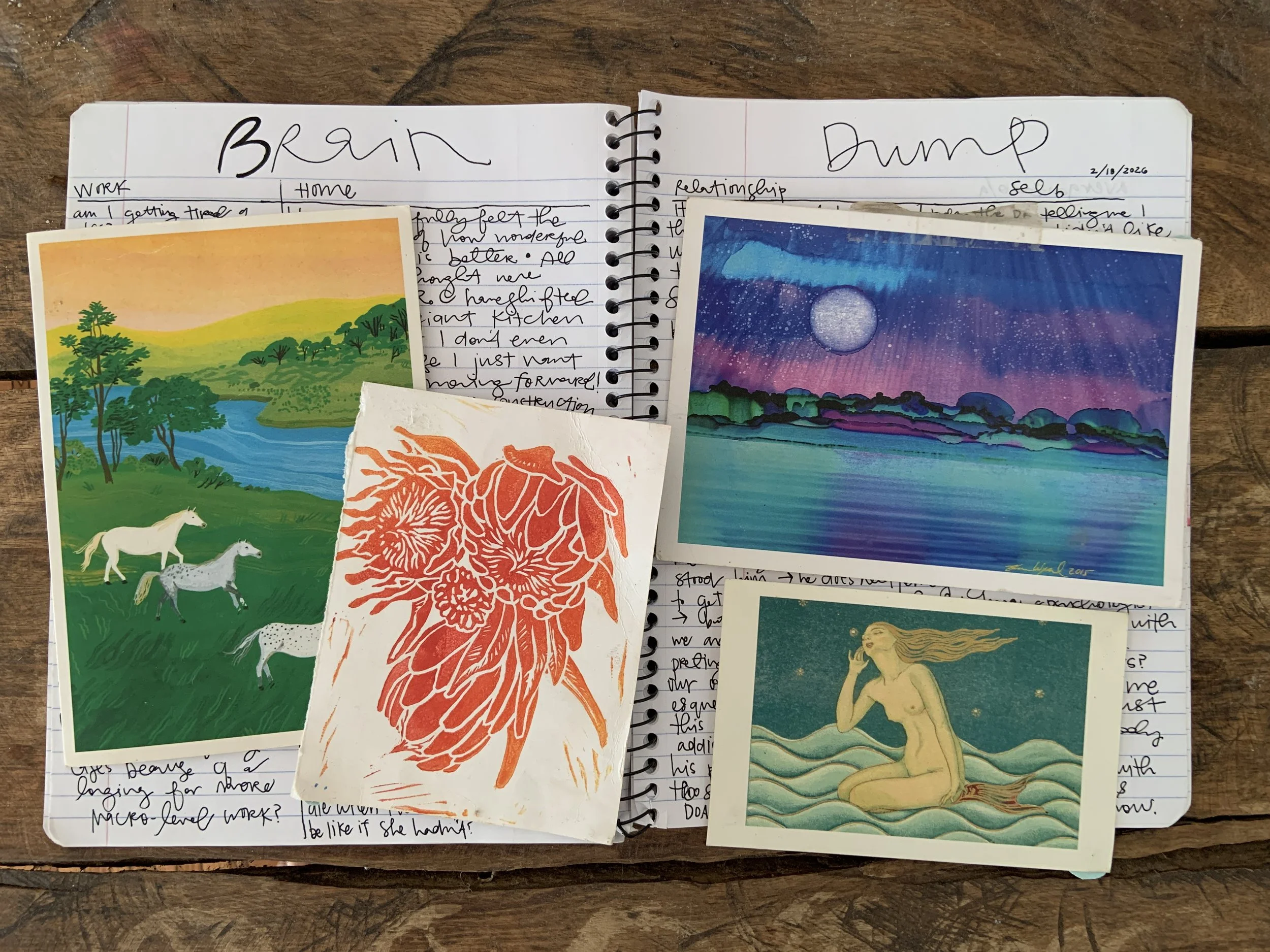
Another great way to combat stress is to get it all out of your head. A “brain dump” just means getting your journal or a blank piece of paper and writing it all down- in no particular order, everything that is overloading you and blocking your mind in stress. You have complete creative freedom here and there are no rules. I like to do brain dumps in my journal in concept-map style (think “clusters” from middle school essays, or webs of thoughts and emotions intersecting each other on paper), or sometimes with lists (I list categories such as Career, Health, Relationships, and write down under them corresponding thoughts I am having that are, in their culmination, contributing to my stress in that moment.
The purpose of a brain dump is not to arrive to conclusions or strategies that will make all your stress go away, but rather to get your thoughts out of your head and into the external world, where you can see them, and where they will, hopefully, become more manageable. Often, a lot of our stress may be from just the sheer number of tasks and responsibilities we have to keep track of. Getting all of that onto paper and out of our minds can help us approach what we need to deal with with more ease and less overwhelm.
6. power hour
My next tip is choosing a time to have a “power hour” for yourself, for which the paper you dumped your brain out onto may be of good use. By “power hour” I refer to an allotted amount of time you intentionally decide to dedicate to accomplishing some of life’s administrative and maintenance tasks. Maybe your to-do list is so long that you don’t even know when you will get everything accomplished. The purpose of the power hour is not to get done as many things from your list as you can in that timeframe, but rather to take a good look at the list, a good look at your calendar, and give yourself the time and space to plan for when you will get those tasks done.
Maybe you have a big writing project you need to work on and upon looking at the week ahead, you see a free morning a few days away that would be perfect for making progress on it- decide to block off that time to dedicate to the project. Make the call to schedule that doctor’s appointment. Text your mother back. Take care of the small tasks you can, and map out when you will tend to the bigger tasks pending in your mind. This will help you free up mental space, and feel a sense of regained control over your tasks, which should lift some stress from your shoulders.
7. clean up
One of my favorite jobs I’ve ever had was at a bustling brunch cafe in my hometown, owned by a family who were a staple in the community. We had many regulars and everyone knew each other. The cafe was decorated with quirky art and an expansive collection of ecclectic salt and pepper shakers. One piece of the quirky art that always caught my eye was a small painted plaque that said “When in doubt, tidy up”. The wisdom of this little plaque holds true: refreshing and resetting our space can work wonders for our mental health and help us reduce feelings of stress and overwhelm.
While many factors that contribute to our stress are often outside of our control, our immediate physical environment and personal space is more often within our control to have our way with. If you are stressed because of a lengthy to-do list and don’t know how you will get everything done, dedicating a little bit of time to tidying up your office or living space may help you approach that list of tasks with a refreshed perspective that may make it feel just a bit less daunting, now that you have reminded your brain you are in control of at least some things- like your space and how it makes you feel.
8. home spa
Home spa is a tip open to interpretation and personalization. I have been implementing a home spa practice more regularly over the last few months. Actually, I have just changed my mindset on what I consider to be “home spa”. I realized I like to categorize even regular care tasks like a skincare routine, showering and washing my hair, and a bit of face yoga or self-massage as “home spa” activities, even if these practices are a part of every day life.
Expanding a home spa routine could include painting nails, a bubble bath, a face mask, a tea ritual or a hair treatment. Home spa is really any care activity that helps you feel more embodied and connected with yourself, that you can do right at home without adding any appointments to your busy agenda.
Taking a little extra time in the morning or evening to give yourself any kind of home-spa attention can help reduce stress insofar as it shifts the focus from our endless stream of tasks to direct actions that actually help us feel physically better in the moment. This boost in our physical state and sensations can have a ripple effect into our emotional and mental states and help us move forward in our lives with less stress.
9. bonus tip: get creative
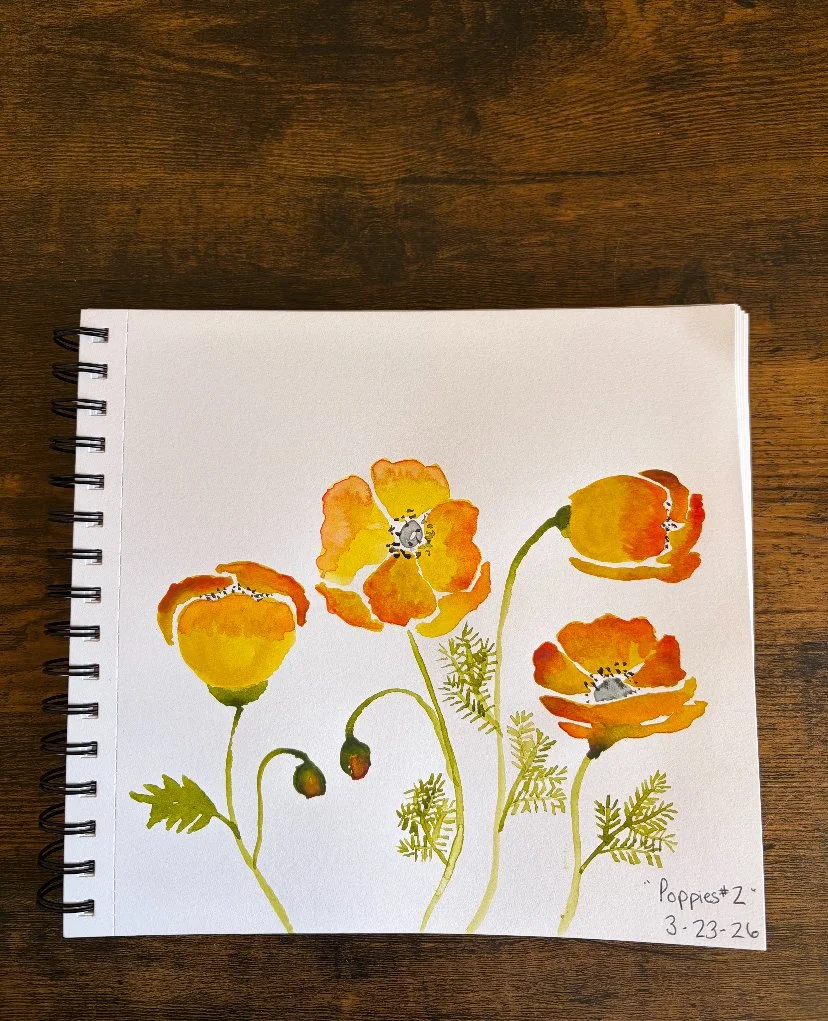
As a bonus tip to beat stress, I draw on a friend’s recent experience taking up watercolor painting. My friend has been undergoing a time of severe stress and grief surrounding some medical difficulties in her immediate family. She is a caretaker, teacher, mother, and also fills many other roles to keep her family moving forward. Amidst the many challenges that have come to define their daily life lately, she recently starting dedicating time to learn watercolor painting.
Now, painting with watercolors has become a regular activity for her and has enabled her to carve out time and space for herself to practice something that actively reduces stress. I believe part of the stress reduction from painting comes from using different parts of her brain and giving permission to the parts of her brain that are so often in over-drive to relax and focus on creating something with no expectations of outcome, rather than having to focus on solving problems and seeing to the fulfillment of needs of others.
I see her painting practice as a soft-radical form of self-liberation. While a seemingly small thing she has integrated into her daily life, the fact that she intentionally chooses time for this activity in light of all the other things vying for her attention is no small feat. As a bonus, her creative practice produces lovely watercolor paintings on a regular basis. Seeing the fruits of our labor can be great for our mindset as it reminds us that there are some things still in our control, and us deciding to dedicate time to creating something new, even if the intention is more on relaxing than producing a work of art, is an active way we can choose ourselves and guide our minds away from their patterns of stress and overwhelm.
Conclusion: take your power back
The message beneath all of these tips to beat stress is that by getting intentional about reducing stress in our lives, we are re-claiming the personal power. While many stress-reduction methods are easier said than done, the tips collected here are highlighted for their accessibility and the ease with which they may be gently integrated into your life.
We don’t always notice it in the moment, but our stress takes a lot from us. It impacts our mood, how we feel in our body, how we engage with other people, and our internal self-talk. Perhaps the “silent killer” aspect of this stress is that we sometimes get used to feeling it and that is when it starts to slowly erode our power.
But it’s never too late! It is always the right time to start taking action to counteract the stress impacting you and your life. I hope some of these tips stood out to you as particularly relevant and applicable to your needs. Even small measures of action to reduce our stress accumulate and pay off over time. Before you know it, some of these tips could become second nature — habits you are instinctively drawn to upon registering a stress indicator in your body and mind.
As a final thought, I want to share that I believe it is important to exercise immense patience with ourselves and other in times of stress. Stress changes our state to the point that amidst it we may not feel fully “ourselves” and definitely not the best version of ourselves. Keeping this in mind can help us be gentle with ourselves and others in stressful moments, and hopefully give us the perspective we need to step back a little, assess, and implement any of the number of tools you now have to help beat stress.
Take care and be well~
Lex XO
