

Travel: Chichén Itzá, Yucatán, México
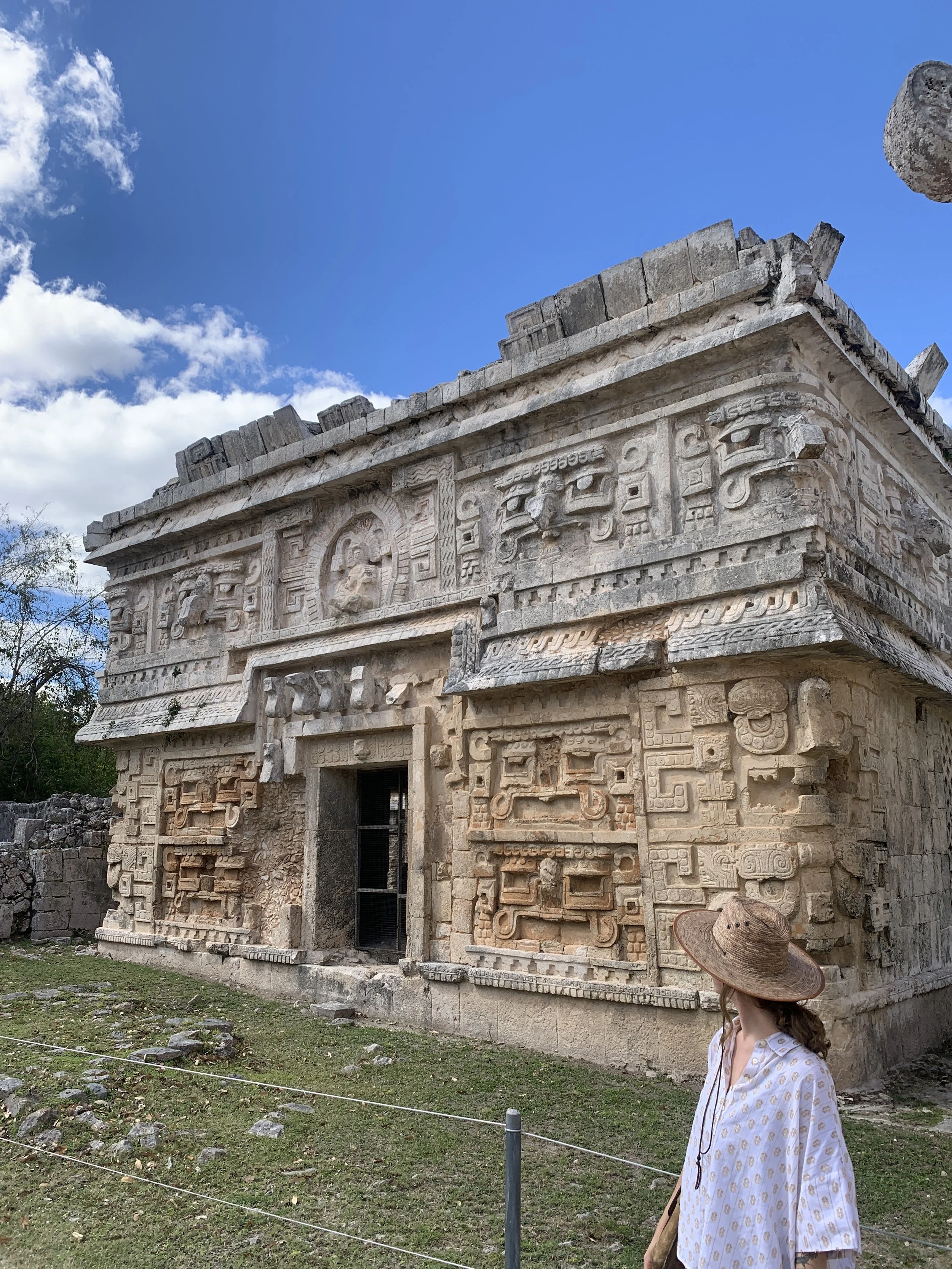
Why travel to Chichén Itzá?
If you are reading this you probably have heard of the Chichén Itzá Arquecological Site in the Mexico’s Yucatán Peninsula. You may even know that it is a UNESCO World Heritage Site and receives some of the highest numbers of visitors of any of the archeological sites in Mexico.
While for some off-the-beaten-path backpackers, Chichén Itzá may seem to be too over-saturated with tourists to peak interest, I believe it still remains. a place well worth visiting, if you have the proper information.
How to Get to Chichén Itzá
Chichén Itzá is easy to get to from most of the major tourist destinations in the Yucatan Peninsula like Cancún, Valladolid, and Mérida. Valladolid is the city most geographically near to Chichén Itzá, with smaller towns and villages in between the two. It is easy and affordable to rent a car for the excursion, even if just for one day.
There are also an abundance of companies in all of the cities mentioned that sell tours to Chichén Itzá. The important thing is to know what kind of experience you want to have.
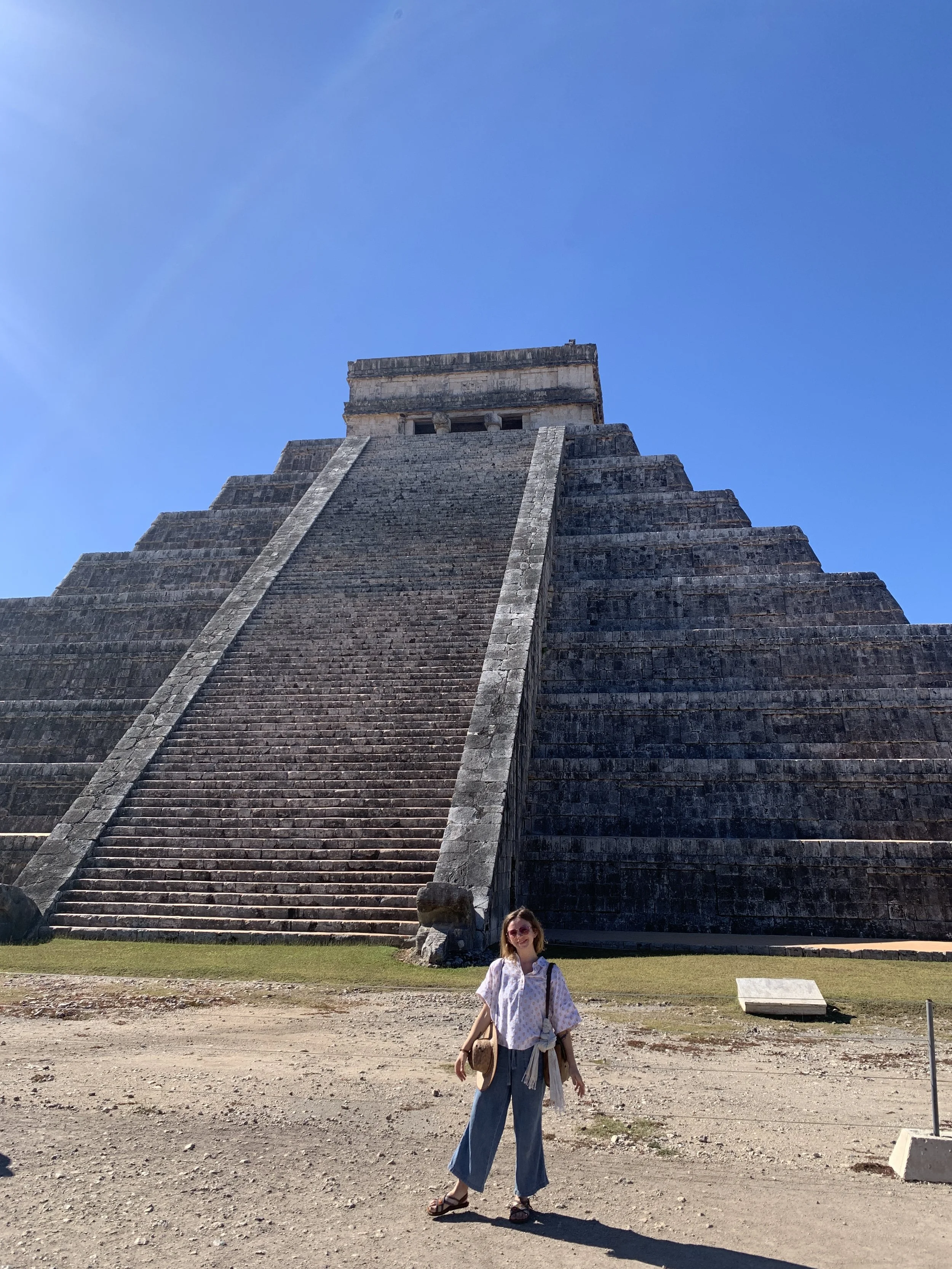
Best tips for travelers to Chichén Itzá
Arrive as early as you can to the ruins
If you end up finding your own way to the ruins rather than paying for a tour or excursion package, you will have the benefit of being able to arrive to the site before the large vans of hundreds of tourists who bought those tours arrive in mass.
This means you will overall get to experience the ruins with less folks around which may facilitate a different feeling of intimacy, wonder, and reverence in the experience.
Arriving early is also important in order to avoid being out at the ruins for too long during the peak heat of the day which has little shade and is often in the 80-95 degree f/27-35 degree c range for several hours of the afternoon.
What to Bring
That brings me to my next tip, what you should bring with you to Chichén Itzá.
Here are my recommendations:
A hat of some kind, to stay protected from the sun, which will also help sustain energy and attention to be able to take the experience as much as you can.
It is best to bring sunscreen along with you, it is sold at an elevated price in the gift shops of Chichén Itzá and you will be able to find it more affordably in pharmacies in the surrounding cities and towns.
Bring water! Again, this is sold in the gift shops at the site, but for double or triple the normal price. It is easy and permitted to bring a purse or tote in with you, and bringing your own bottle of water will set you up to both be prepared for the heat and long hours of walking around, as well as save a bit of money.
In the same bag you use to bring in your water and sunscreen, consider bringing a light snack with you, such as nuts or banana chips. It is permitted, and will be one less thing to have to worry about finding in the shops on site. Having a quick and easy snack with you may help optimize your time and be able to keep moving through the ruins without a hunger-crash. If you bring snacks, it is incredibly important to take your trash with you! Do not leave it behind and risk harm to the site or it’s surrounding ecology and wildlife.
Comfortable shoes are very important because the archeological site of Chichén Itzá is expansive and requires a lot of walking to explore all the different components. The more comfortable your shoes are, the more sustained energy you will have and the better you will feel in your body wandering through the ruins.
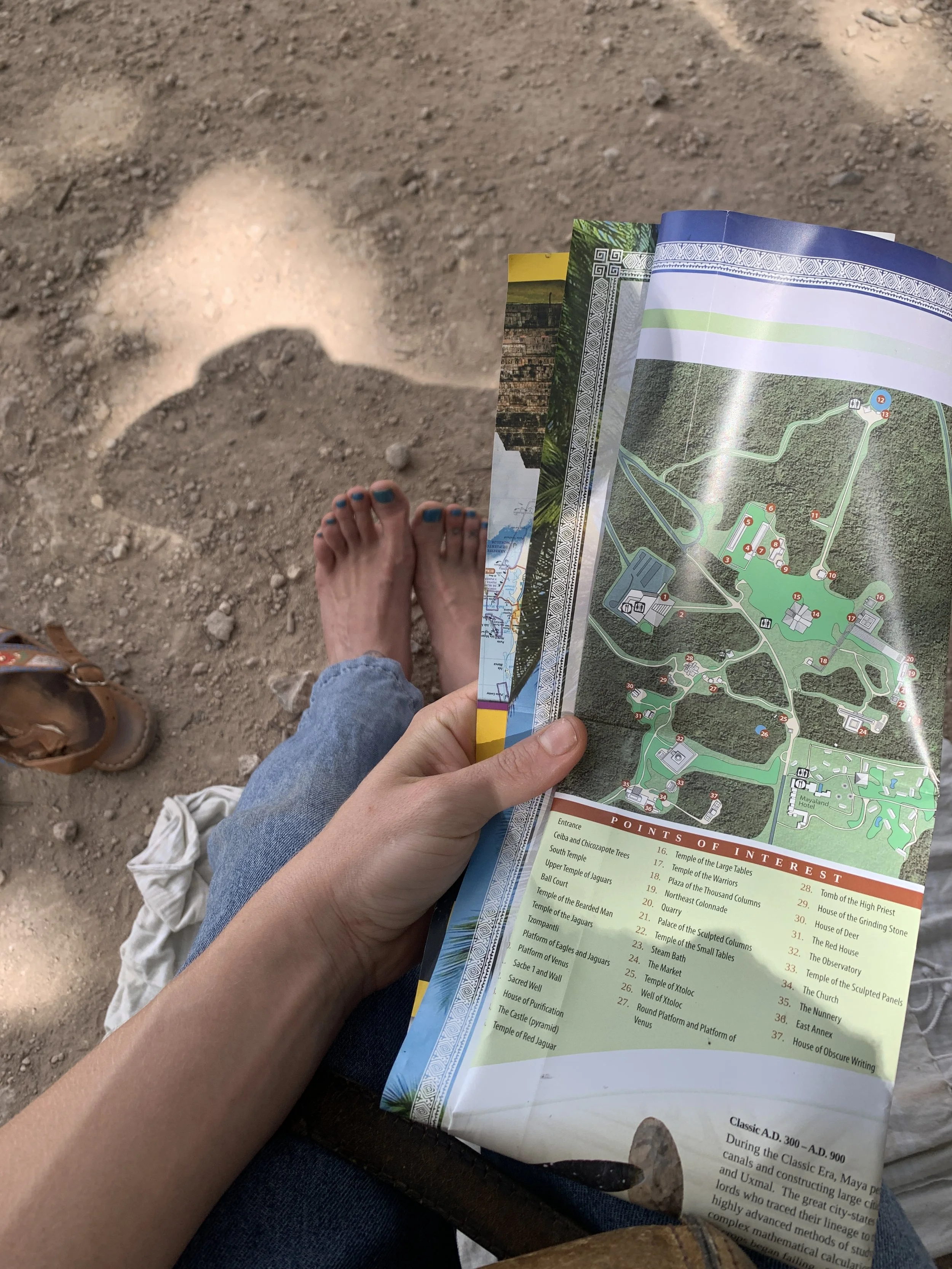
While definitely optional, bringing a paper map with you of the Chichén Itzá ruins is extremely useful and will allow you to orient yourself wherever you are in the site without looking for one of the large public maps posted in different spots around the ruins.
Lastly, while not required to enter, I recommend bringing your passport along with you into the site to make the most of the chance to get the special stamp for visiting the Chichén Itzá Archeological Cite, which leads me to my next tip.
Make sure to get your Chichén Itzá Passport Stamp!
One of the other perks of visiting somewhere that is on the well-beaten tourist path is that so many travellers visit these ruins that they made a special passport stamp you can ask for after buying your admission for having gone to these ruins. It is quite uncommon to come across opportunities for a passport stamp beyond ports of entry in airports and international borders, so being able to get that bonus stamp just from Chichén Itzá is a nice surprise.
Guides outside of the site may mention this to you and say you can only get the stamp if you go in with a guide, this is more than likely just do to a language barrier. A local guide who speaks Spanish will know where to go, who to talk to, and what to say to get you that Chichén Itzá passport stamp after entering the site. But a guide isn’t required in order for you to get one.
After your pay your entrance into the ruins, which you can find updated information on here, right before you cross through the turnsyles to enter the site, to the left there is a small closed room with some windows where you can politely approach and ask them to put the Chichén Itzá stamp in your passport.
This is definitely easier to navigate if you speak Spanish, but if not, just go to that window and say “Yo quiero el sello de pasaporte de Chichén Itzá por favor.” or ask a worker after paying your admission “Donde puedo ir para que me pongan el sello de Chichén Itzá en mi pasaporte?”
It is likely that most people working there will be happy to point you in the right direction and help you get your stamp. Be careful to not just waive your passport around to indiciate what you are looking for, but rather use words, eye contact, and clear communication, then upon arriving to the window you can show your passport so they know what you are seeking and stamp it for you.
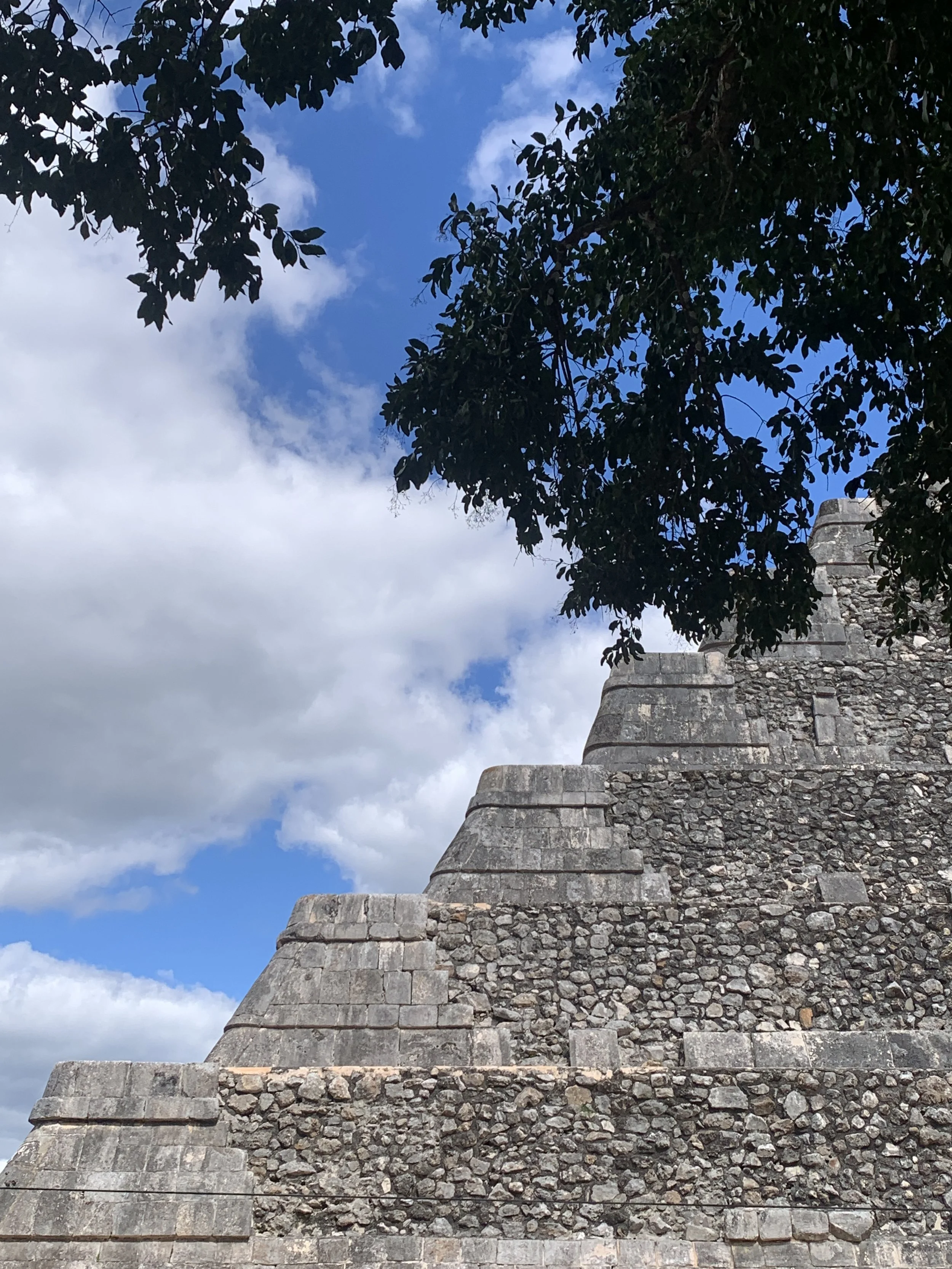
Consider hiring a tour guide once you get there
While a tour guide is not explicitly required to enter, enjoy, or explore the ruins nor needed in order to get your Chichén Itzá passport stamp, it could still be a good opportunity to take advantage of.
The ruins are expansive and the history behind them is complex and fascinating. While there is a lot of info available on the different signs throughout the site, having a hired guide means you can unpack questions that may come up for during your time at Chichén Itzá, because they definitely will.
It is easy to find a guide outside or upon entering the site, as this is the profession of many local people and they are very used to offering and extending their services to the many visitors at the site. Generally, they are nice and won’t bother you if you say you’re not interested. Still, to make the most of your time at Chichén Itzá is may be worthwhile to hire a private expert who can explain more readily all the nuances of the history of Chichén Itzá. You may learn more and the info you acquire may stay with you longer after having had the chance to discuss it with your guide.
There are guides outside the ruins that speak other languages and there are enough of them that you should have no issue finding one that can explain the ruins to you in your own language, or at least a language you may be comfortable in. Some negotiating over the fare may be normal, but it is still nice to pay them the majority of what they are asking for as the service they provide if generally worth it and giving the tours is a huge source of economic sustenance for the local communities.
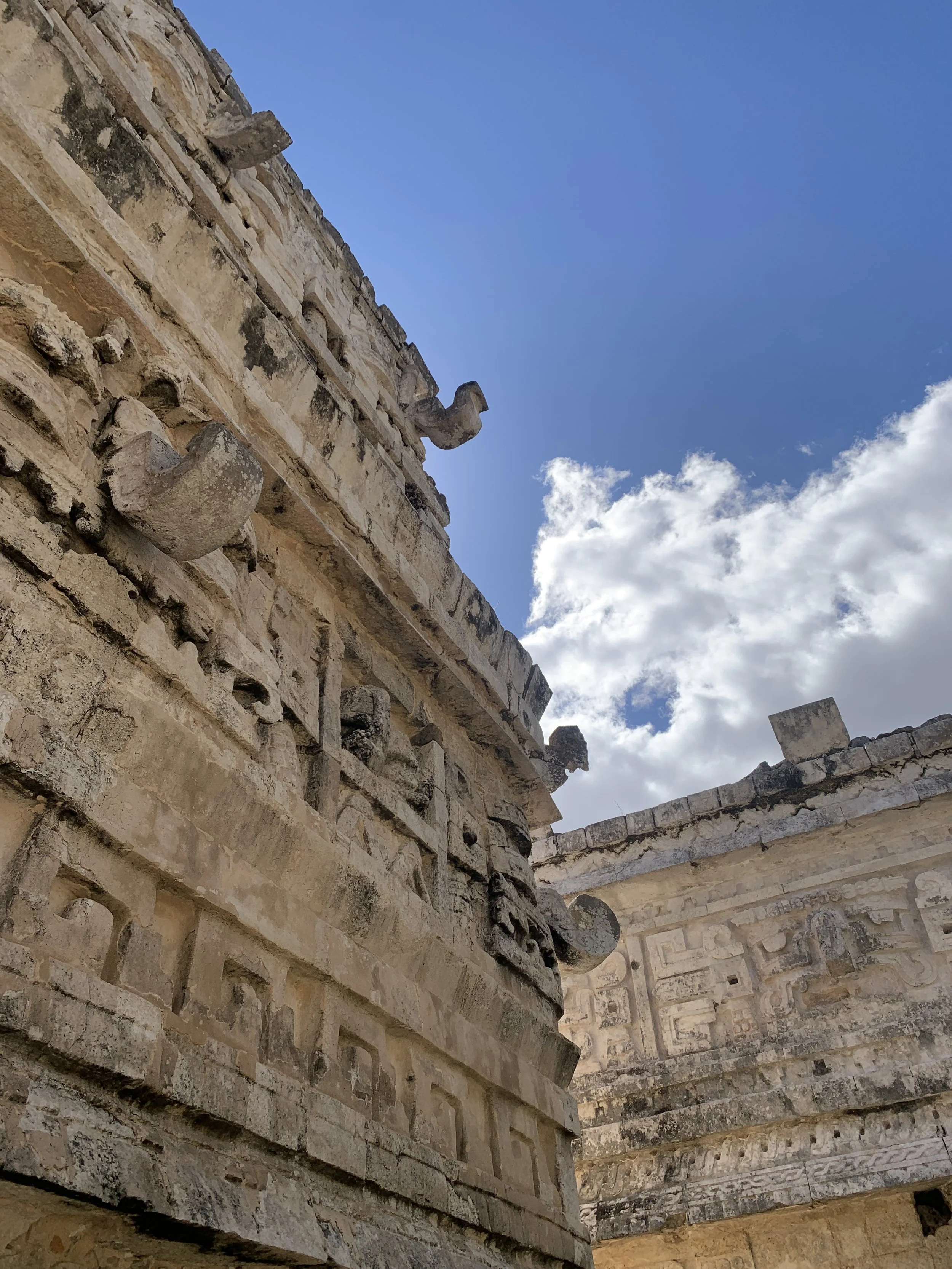
How long should I plan to stay at Chichén Itzá?
When planning how much time you should give yourself to explore the Chichén Itzá ruins, it is good to consider leaving yourself at least three hours and maybe about five at the most. The site is expansive but not too much that it feels like you are not able to see everything if you desire to. Some people may want to stay the night nearby to be able to go back again the next day just to make sure to take it all in.
The amount of time you will want to spend at Chichén Itzá also depends on your motives for going. If you are very interested in the history of the area, you may want to plan to stay longer so you can make sure to learn as much as possible. If you are just wanting to experience first hand this world-wonder, maybe you won’t want to spend the whole day but perhaps just the whole morning.
It is important to consider the heat of the day when planning for how long to say as well, since if you arrive later in the morning the heat may push you to leave sooner than you would if you had arrived earlier.
Overall, it is wise to plan to spend 3-4 hours at the ruins and aim to arrive at least by 9am, but the earlier the better.
Be kind to vendors
My final tip for visiting Chichén Itzá is to be kind and patient with the many vendors who will offer you souvenirs to buy all throughout the ruins. While it can get a bit repetitive to hear so many people try to sell you something or strike a deal with you, it helps to keep in mind that selling souvenirs in Chichén Itzá is the livelihood of many locals and they don’t mean any harm, it is simply how they support themselves and their families. The fact that there are so many vendors throughout the site means they are somewhat competing with each other for your attention, and also your dinero.
If you are not interested in buying, politely saying no, thank you usually works to end the interaction, and I find most vendors at Chichén Itzá are not the pushy type to keep trying to convince you to buy something after you say no.
While most of the items they sell are not made locally and don’t necessarily support the local people in terms of artesans or craftspeople, it does still support the local economy since it supports the local vendors.
It is up to you to buy or not buy a token by which you may remember your visit to Chichén Itzá, but whatever you decide, be sure to treat the vendors with kindness as you move throughout the site.
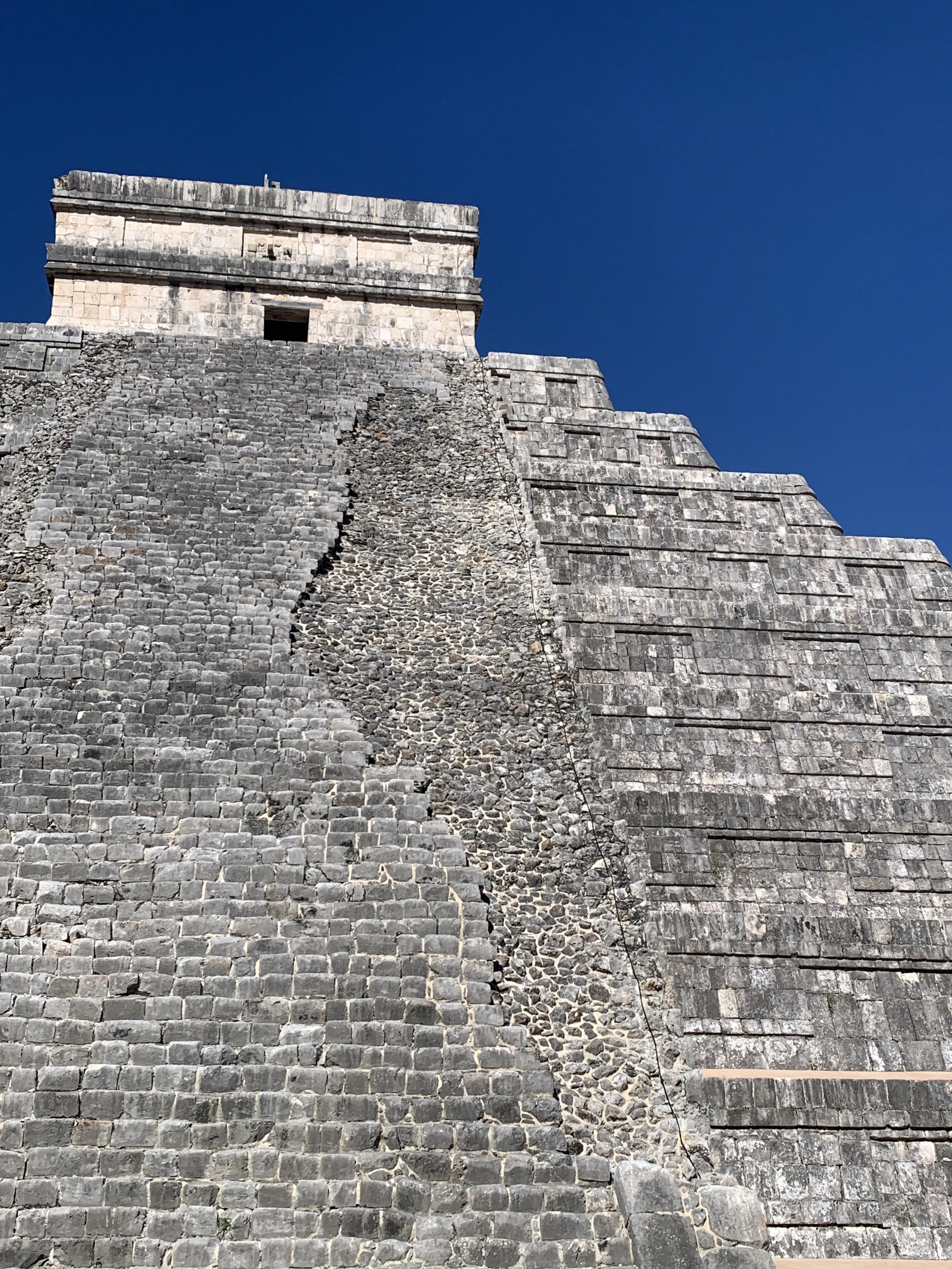
Other things to know for Chichén Itzá
After taking those tips into consideration, you should be ready to visit Chichén Itzá and enjoy it as much as you can. Still, there is some other helpful information to know for your time both in and around Chichén Itzá, as well as traveling about the Yucatán Peninsula in general.
New Chichén Itzá Museum
In early 2024, a new museum, el Gran Museo de Chichén Itzá opened up right outside the ruins. It contains many artifacts relevant to the history of Chichén Itzá and the ancient Maya. If you leave the ruins feeling inspired for more, consider visiting the museum on your way out, as it is just at the end of the road that you will take as you drive out of the ruins back towards the neighboring cities.
Tipping Culture in the Yucatán Peninsula
Many visitors to México are not completely sure about the tipping culture of the country, or specifically of the Yucatán Peninsula, where the economy is largely fueled by tourism and a small tip that seems small to you may mean more than you think for a local worker.
At restaurants in the Yucatán Peninsula, depending where you are, there is a not a base percentage of tip expected, and it really depends on the service you get and how you want to acknowledge it. That said, if you have good or great service, leaving a 10-15% tip can be a great way to show your gratitude. If you have excellent service, leaving a 20%+ tip is the best way to show your appreciation. Not tipping at all may not be an issue in smaller towns and villages, but could be considered rude in areas that experience more traffic of tourism, since many workers in those areas are more used to receiving tips from guests.
A rule of thumb could be to tip 10% unless you receive a service that is exceptionally bad or exceptionally good, in which case that percentage could be adjusted accordingly. I mention this in this article as for those who decide to contract a tour guide for their visit to Chichén Itzá, if their guidance adds value to your experience at the ruins, tipping them 10-20% the cost of the tour may be the best way to express your gratitude for the services they provided you while exploring the site.
Other Nearby Ruins to Consider Visiting
If visiting Chichén Itzá piqued your interest in the history of the ancient Maya, there are plenty other ruins around the Peninsula that are also worth visiting to grow your knowledge and amplify your experience. At the same time, if you found Chichén Itzá to be just too saturated with tourists at this point, as one of the most famous archeological sites in the world, don’t lose hope! There are so many ruins throughout the Peninsula and some of them are hardly visited, recently excavated, or just less susceptible to receiving mass amount of tourists for being lesser known.
Uxmal
Uxmal is a great option for fans of Mayan ruins and is easy to get to if you are driving between Mérida and Bacalar. It is situated in a region of several charming Mayan pueblos that are also worth visiting and staying the night in so you can hop over to the ruins the next day. As with all other sites, it is recommended to get there early in the day before the weather gets too hot.
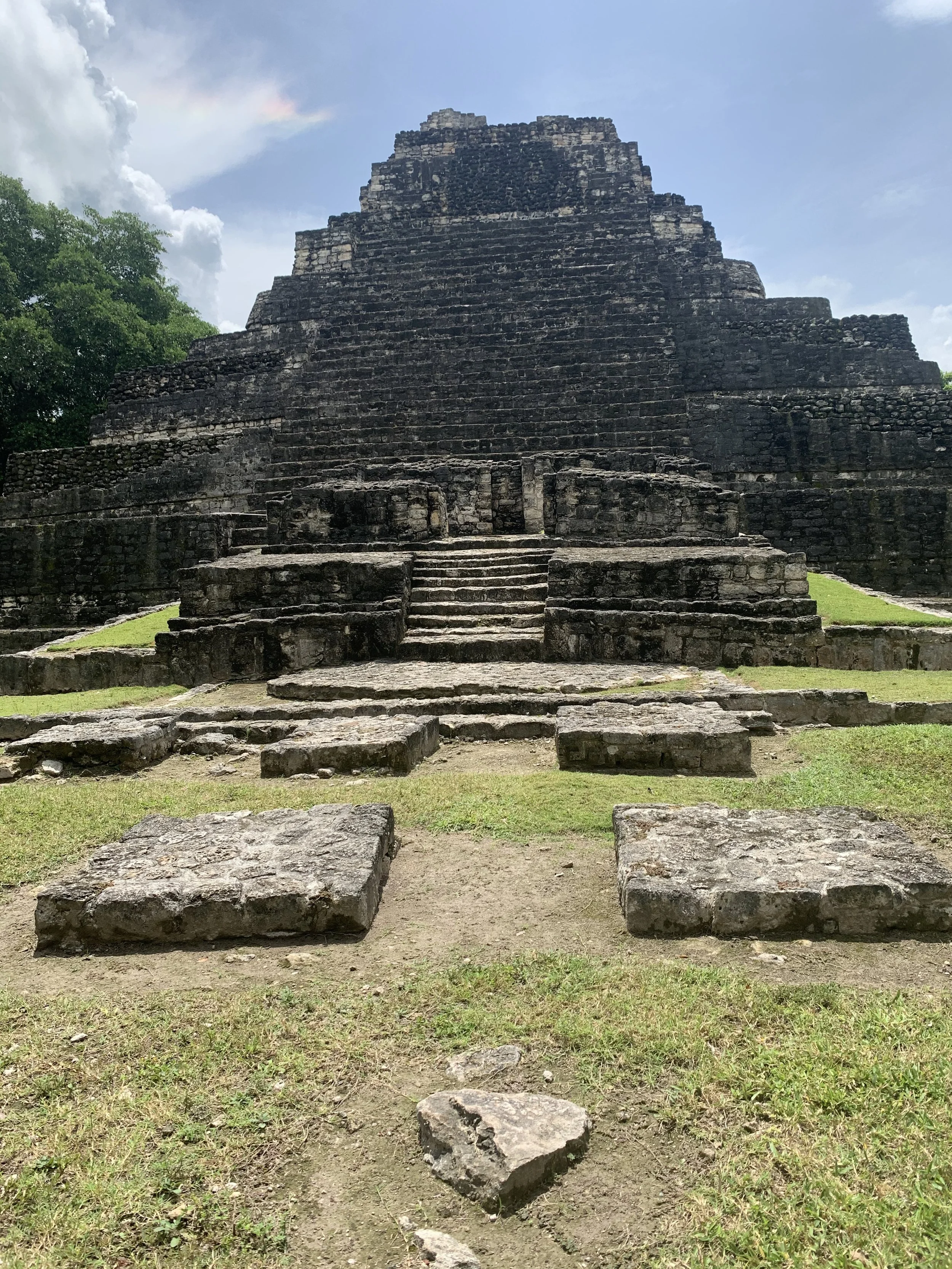
Chacchoben
Chacchoben ruins (pictured here) are lesser know than Uxmal and it is not uncommon to be one of a handful of visitors there, quite the contrast from the bustling Chichén Itzá. Chachoben is about 30 minutes outside the town of Bacalar, and a great stop to take advantage of on your way to the lagoon of seven colors. Since it is smaller, planning to be there for about two hours should be sufficient. Chacchoben is more recently excavated than Chichén Itzá, so there are still some pyramids around the site that have yet to be uncovered. This makes the feeling of the place slightly more wild and authentic. The fact that these ruins were left along for so long and are still quite surrounded by jungle means it is also not uncommon to spot or hear some monkeys amidst the trees while you explore the ruins.
Cobá
Cobá ruins are another great site to consider if you want to see more Mayan history during your time in the Peninsula. Cobá is located just outisde Tulum and is easy to get to if you are driving between Chichén Itzá or Valladolid to Tulum. While these ruins are bigger than Chacchoben and Uxmal, they are still smaller than Chichén Itzá, so planning for 2-3 hours to visit should be sufficient. Near Cobá there are many lovely accommodations to choose from and the town is a nice break from the larger more touristic towns like Tulum.
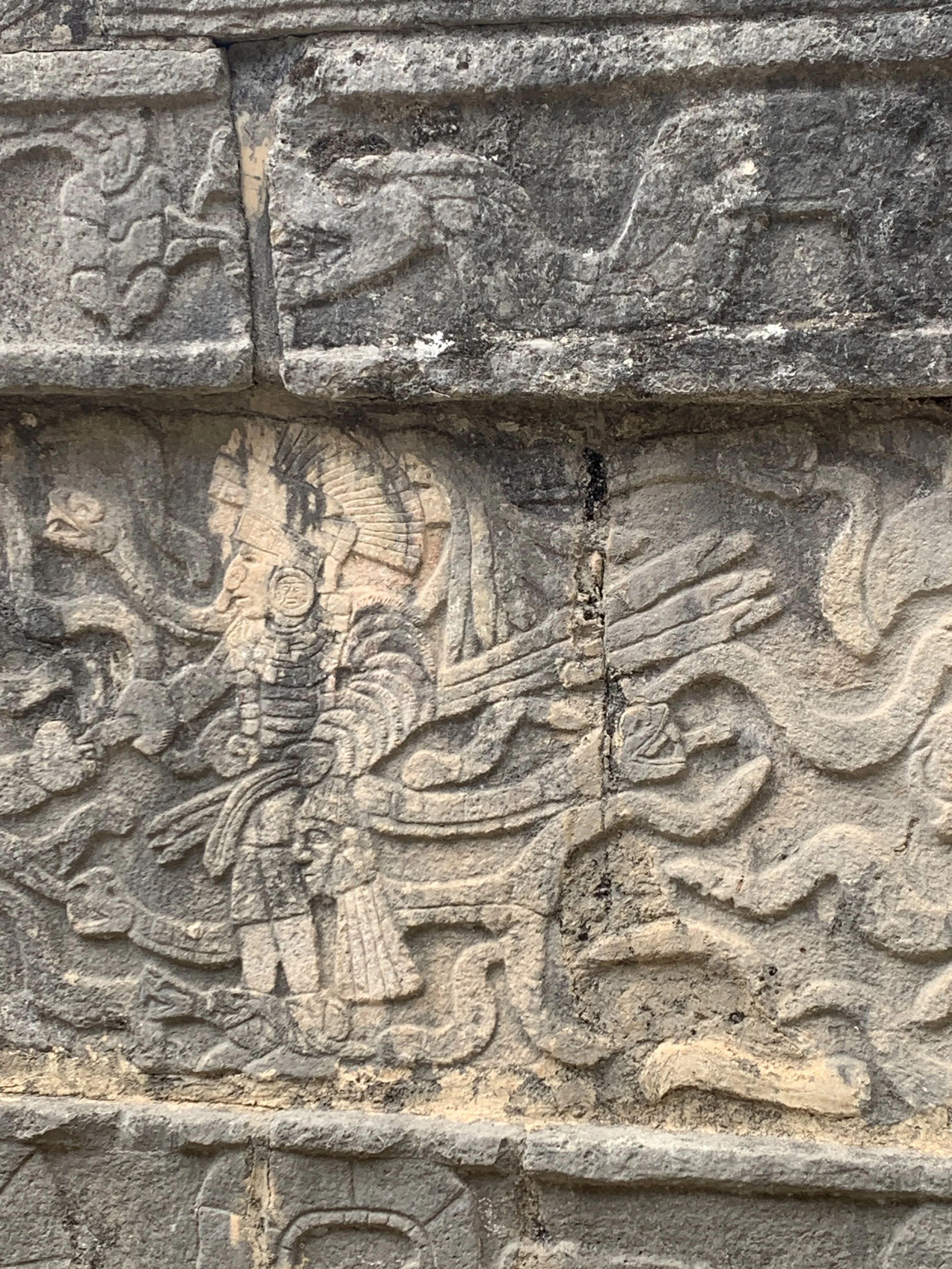
While it is true that there are a lot of other tourists and travelers at Chichén Itzá most of the time, this doesn’t override the magnificence of the ruins or mean that they aren’t worth visiting. I hope these tips help you feel more prepared for your adventure to Chichén Itzá and other ruins in the area. If you are left with any questions about Chichén Itzá or traveling in the Yucatán Peninsula, don’t hesitate to reach out to me in the contact form of this website!
Buen viaje!
XOXO,
lex
