

AIP Yes Lists: A Positive Reframe of the AIP Diet
What is the AIP Diet?
The autoimmune protocol diet is a lifestyle medicine tool that functions by eliminating foods and food groups that have potential to cause inflammation in the body and replacing them with nutrient-dense anti-inflammatory foods, then reintroducing the eliminated foods back one at a time to gauge their impacts on the body and autoimmune symptoms.
Key Considerations
It is important to note that the AIP diet may not be for everyone navigating autoimmunity, and experts specifically advise precaution or avoidance of the diet all together for anyone who has ever struggled with disordered eating. It is recommended to speak with your health care provider, a naturopath, or a functional medicine doctor before beginning the AIP diet. The information in this post is not intended to replace advice of a qualified medical professional.
The AIP Diet consists of three phases:
the elimination phase
the reintroduction phase
and the maintenance phase
During the elimination phase, foods are avoided that have potential to cause inflammation in people with autoimmunity.
Foods that are eliminated include:
gluten & grains (this means all grains including corn, rice, buckwheat, oats, etc.)
all legumes (beans, soy, lentils, peanuts, etc.)
all seeds (including cacao, chia seeds, pumpkin seeds, coffee, etc.)
all nightshades (including potatoes, tomatoes, tomatillos, chilis, eggplant, peppers, paprika, etc. *be aware of other sneaky nightshades like ashwaganda and tobacco during this stage.)
all dairy (including milk, yogurt, cheese, cream, etc.)
eggs
seed and nightshade-based spices like coriander and paprika are excluded
all sugar
all alcohol
As you can see, the list of foods eliminated is extensive and one may easily be intimidated by all that is excluded during the first phase of the AIP diet. This is why I designed AIP Yes Lists to facilitate your success with the AIP and shift focus to all that is included.
Starting the Autoimmune Protocol Diet
When I began treating my autoimmune symptoms with lifestyle medicine over two years ago, the autoimmune protocol diet (AIP) was a foundational first step. Within a few days, my pain diminished significantly, and while getting used to life on AIP was certainly a process, the drastic change I felt in my body so quickly was powerful enough to keep me committed.
Keep in mind:
It is important to note that the AIP diet may not be for everyone navigating autoimmunity.
For examples, some experts specifically advise precaution or avoidance of the diet all together for anyone who has ever struggled with disordered eating.
It is recommended to speak with your health care provider, a naturopath, or a functional medicine doctor before beginning the AIP diet.
This information in this post is not intended to replace advice of a qualified medical professional.
While I could write volumes about the AIP diet and how it has helped me heal myself, I admit it can be extremely challenging to implement, especially at the beginning. The near immediate diminishment of my main symptoms (joint pain, brain fog, fatigue) was a leading motivator for me to stick with it.
Framework of the AIP Diet
Despite the obvious importance of being aware of all the foods that are eliminated in the elimination phase of the AIP, to be later reintroduced one by one during the reintroduction phase of the diet, this framing makes it all too easy to fall into a mindset obstructed by “good foods vs. bad foods” or “can’t eat vs. can eat”. This mentality may contribute to a sense of deprivation from non AIP-compliant foods we miss, feelings of shame or guilt at not following the AIP perfectly, or even lead to people giving up on AIP all together before even experiencing it’s life-changing potential. That said, approaching the AIP with these mindsets will not help us succeed on the AIP diet or to start feeling better. For this reason, I designed a unique tool to help us reframe the AIP elimination phase in a positive light and focus on the rich abundance of foods that are included, centering what we can consume worry-free and shifting the attention away from all that is excluded.
Potential Challenges during the AIP
Common challenges faced during the AIP diet are:
the difficulty of combatting cravings of foods that are eliminated during phase one (typically gets easy to resist as we start feeling better, and the brain/body beings to associate certain foods as inflammatory of associated with pain, while other AIP friendly foods become associated with painlessness or improvement of symptoms).
feeling hesitant to reintroduce foods during the second phase of AIP because of how much better you feel. This is normal, but it is stressed by experts that reintroducing foods and identifying exactly which foods do not cause your symptoms to spike is extremely important, as the AIP diet is not intended to be practiced for a prolonged period and could potentially lead to nutritional deficiencies.
navigating eating out at restaurants, dining with groups, friends or family, eating while traveling. Yes, these are inevitable challenges, but they get easier over time as we become more informed on what spikes our symptoms and what doesn’t. Friends and family should understand that you are making temporary changes to your lifestyle for the long term benefit of your own health and well-being. Travel and dining out may become more difficult, but never impossible. Just get creative, be patient, and keep your own best interest centered in your decisions.
What foods are included on AIP?
In common AIP discourse, the vast list of foods that are included on the AIP diet deserves more celebration and attention.
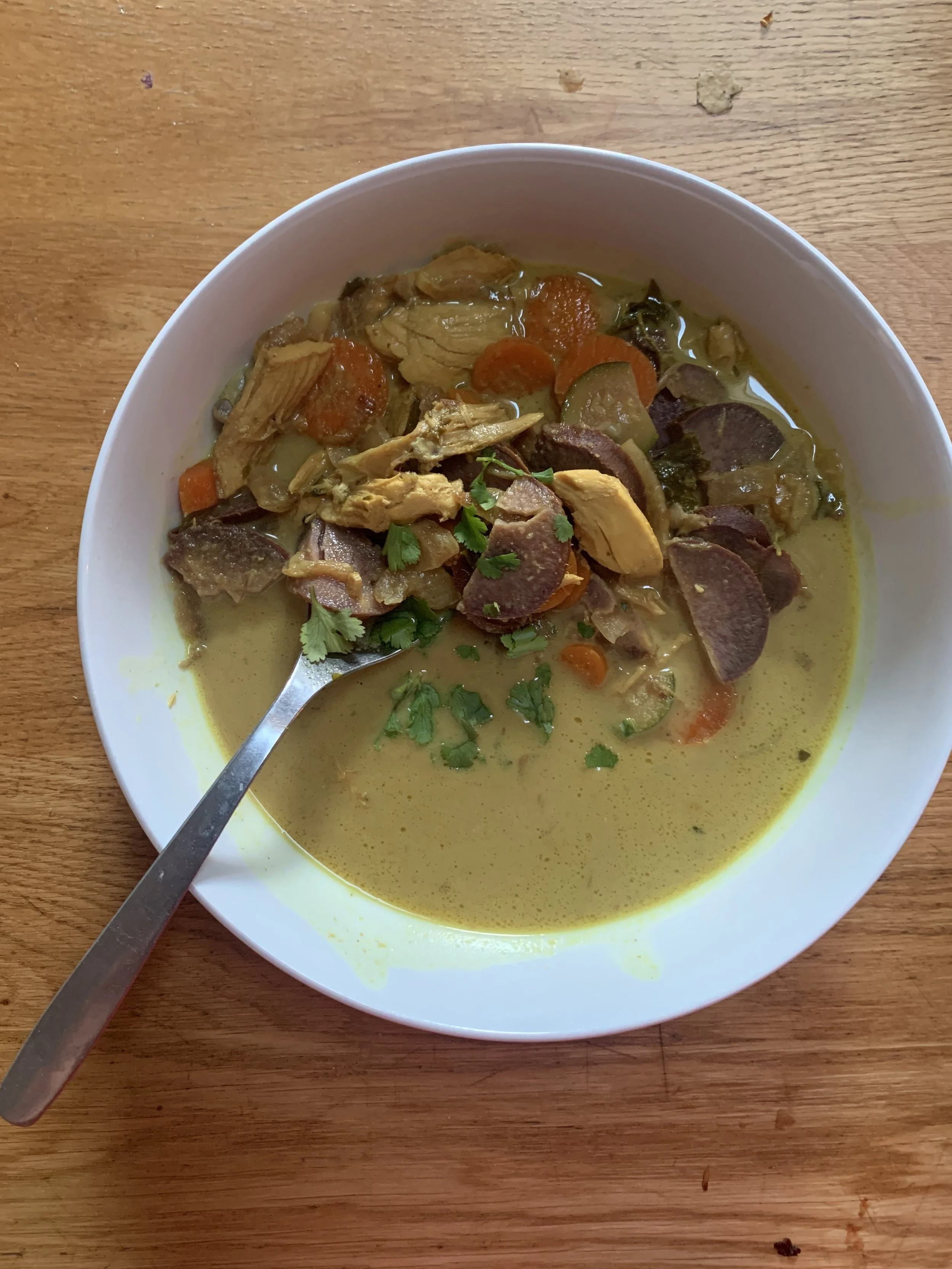
The AIP Diet is based on anti-inflammatory foods including:
meats and fish (all kinds of both are included, but it is recommended to exercise caution and mindfulness regarding one’s amount of consumption of red meats as well as seafood high in mercury, such as tuna)
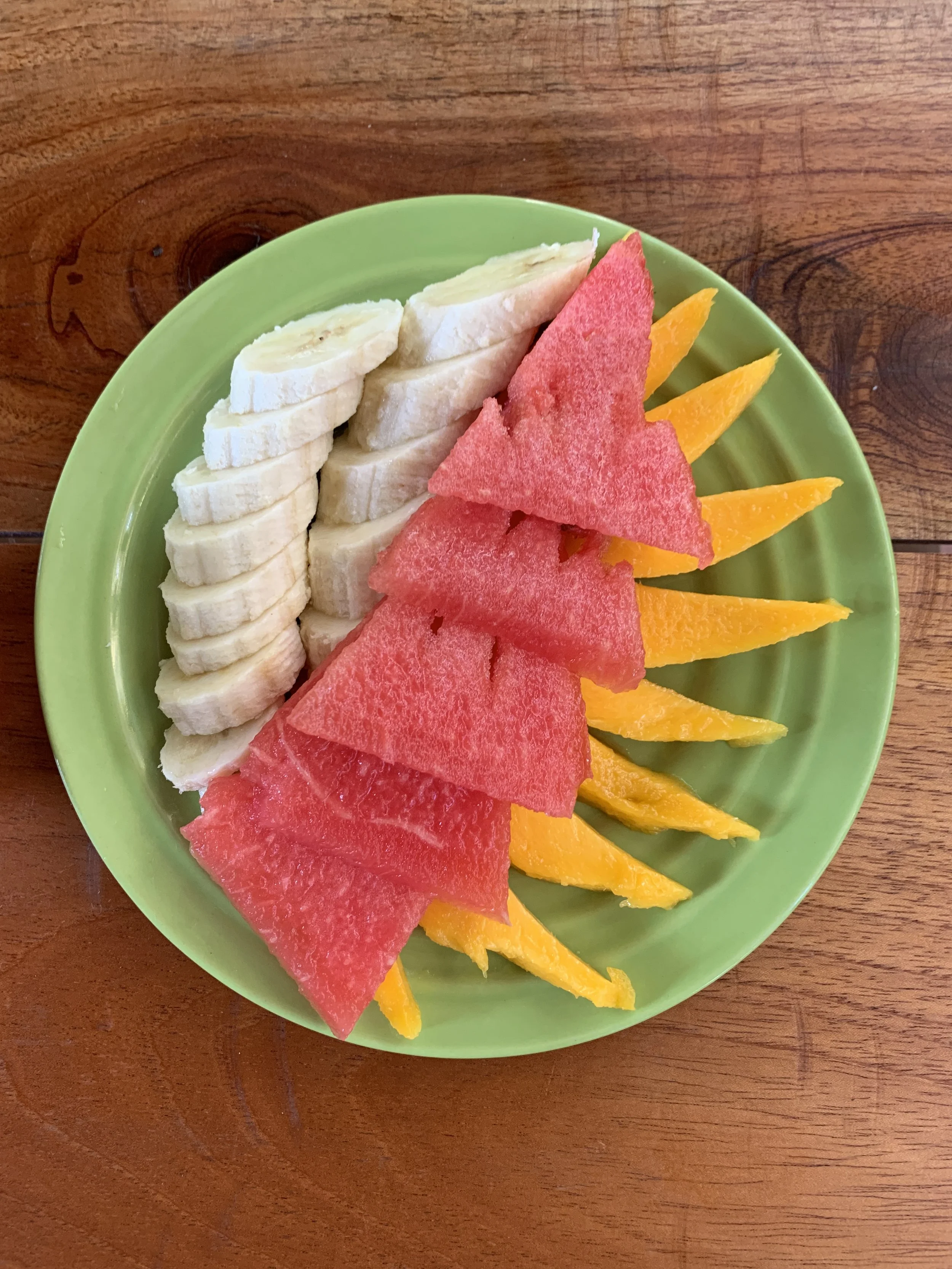
all fruits are included (besides tomatoes, which is a nightshade). This means fresh fruit, dried fruit, dehydrated fruit, frozen fruit, etc. It is recommended to be mindful of how much fruit is consumed given its generally high sugar content.
all vegetables are included (besides nightshades)
healthy fats are included like olive oil, avocado oil, and coconut oil.
all mushrooms are included on the AIP diet
vinegars
spices and herbs (all leaf & root based spices like basil, oregano, turmeric, ginger, garlic, etc. Paprika and coriander are excluded)
A wildcard list of other miscellaneous AIP-Compliant foods, not easily categorized, are also included on AIP including carob, vanilla, tapioca, tigernut (not really a nut), honey, agave and more.
What are AIP Yes Lists?
When I began the AIP diet , I noticed that the vast majority of resources out there about it primarily focus on all the foods that are eliminated for their potential to cause inflammation in bodies experiencing autoimmunity.
Of course, this is very important since one must know which these foods are in order to carefully avoid them so that the body can start trying to repair itself with more ease, free of anything that may possibly be contributing to the inflammation that manifests in different autoimmune symptoms.
My AIP Yes Lists are a user-centered tool to facilitate success and a positive mindset on the AIP diet. While it is very important to educate oneself on the foods to be avoided during the first phase of AIP, and absolutely necessary to succeed in treating symptoms with this lifestyle medicine, focusing on what you can eat that you know if safe and won’t cause inflammation in your body offers a more optimistic approach to embarking on the AIP.
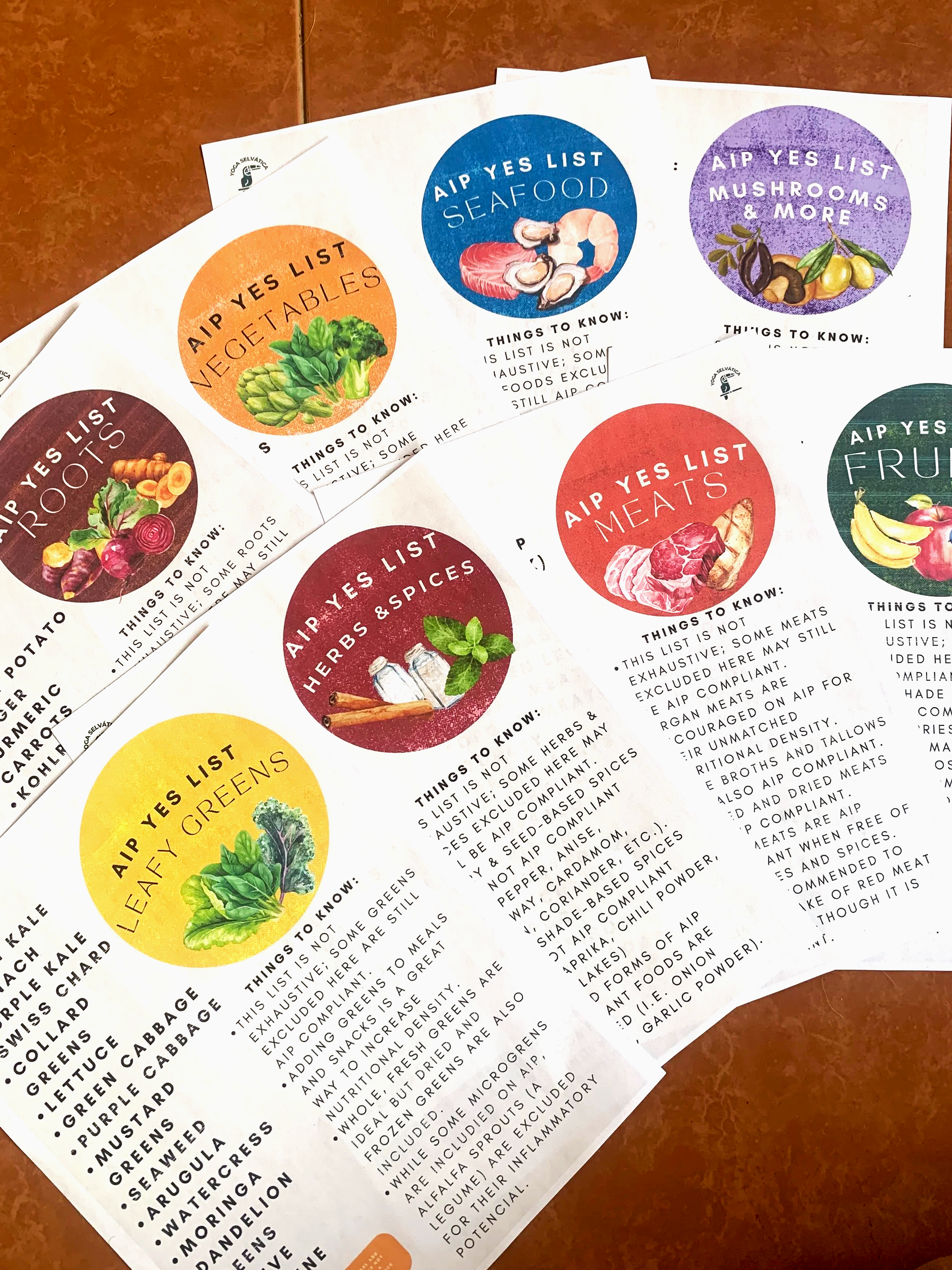
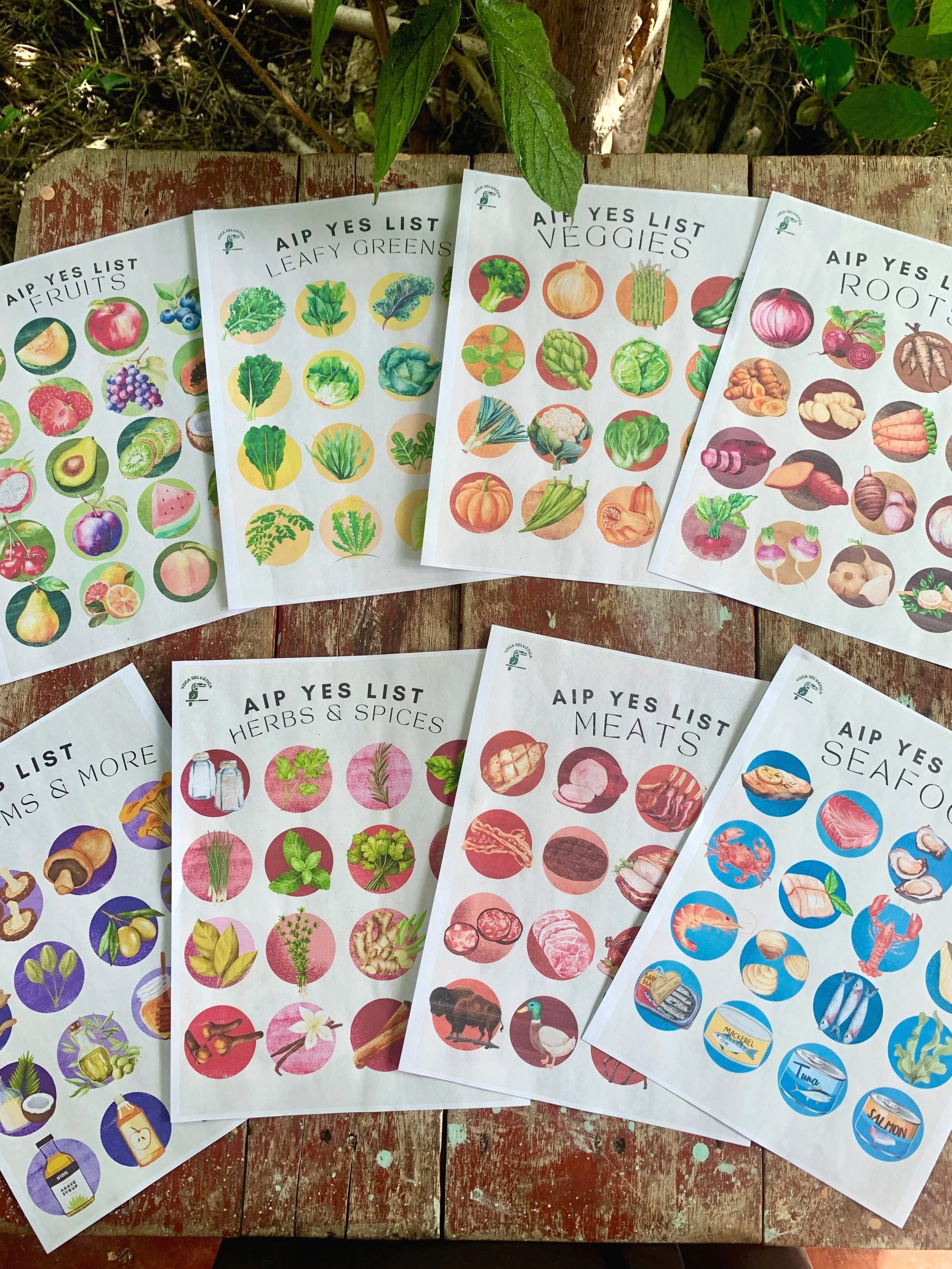
My set of 8 AIP Yes Lists incorporate an appealing design with a visual guide to the many wholesome foods that are included on the AIP, to make it easy to follow the diet’s guidelines and keep up the inspiration to stick with the challenge of taking your symptoms into your own hands through diet and lifestyle.
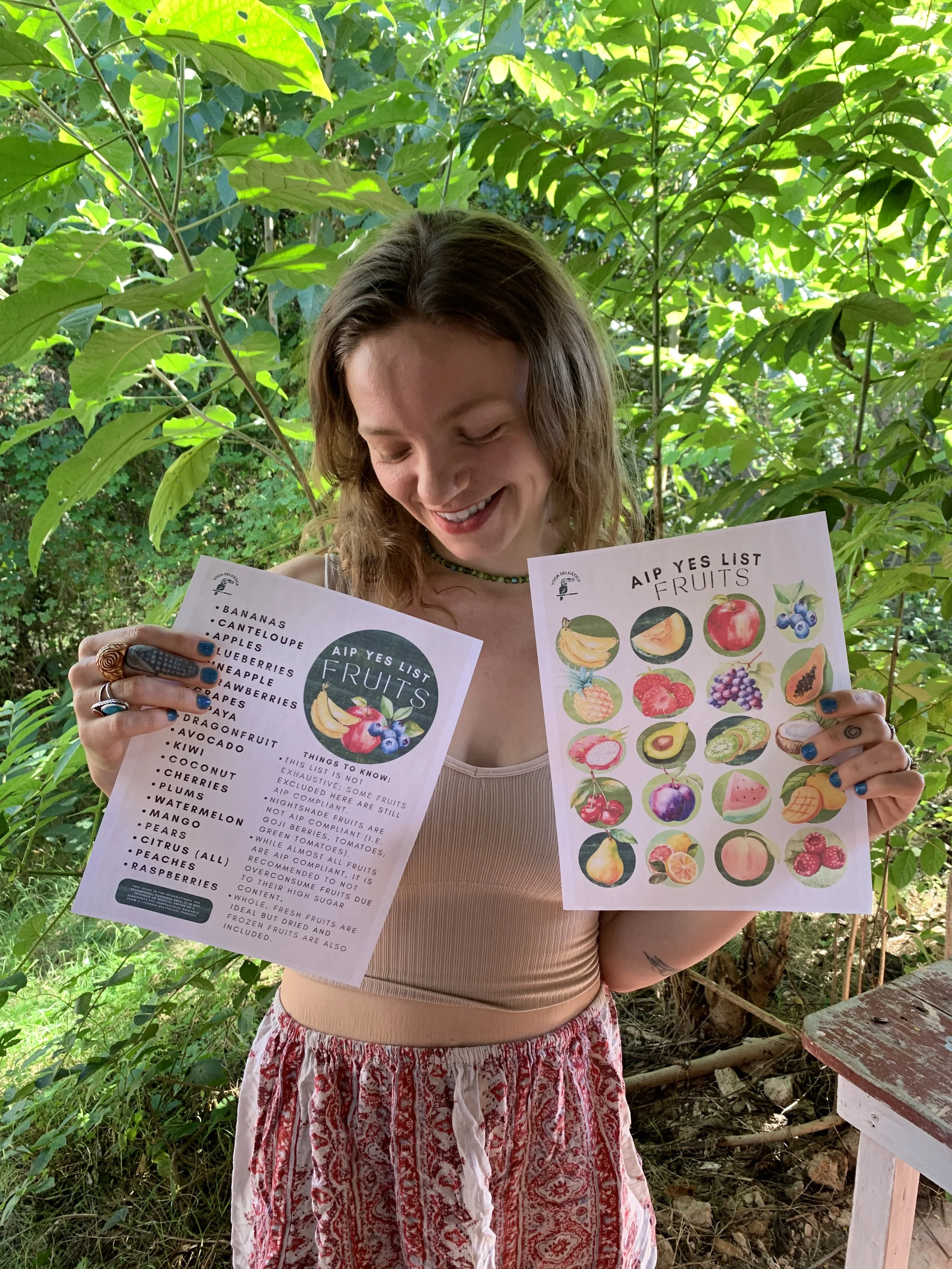
To make things easy, the AIP Yes Lists divide the AIP included foods into eight categories:
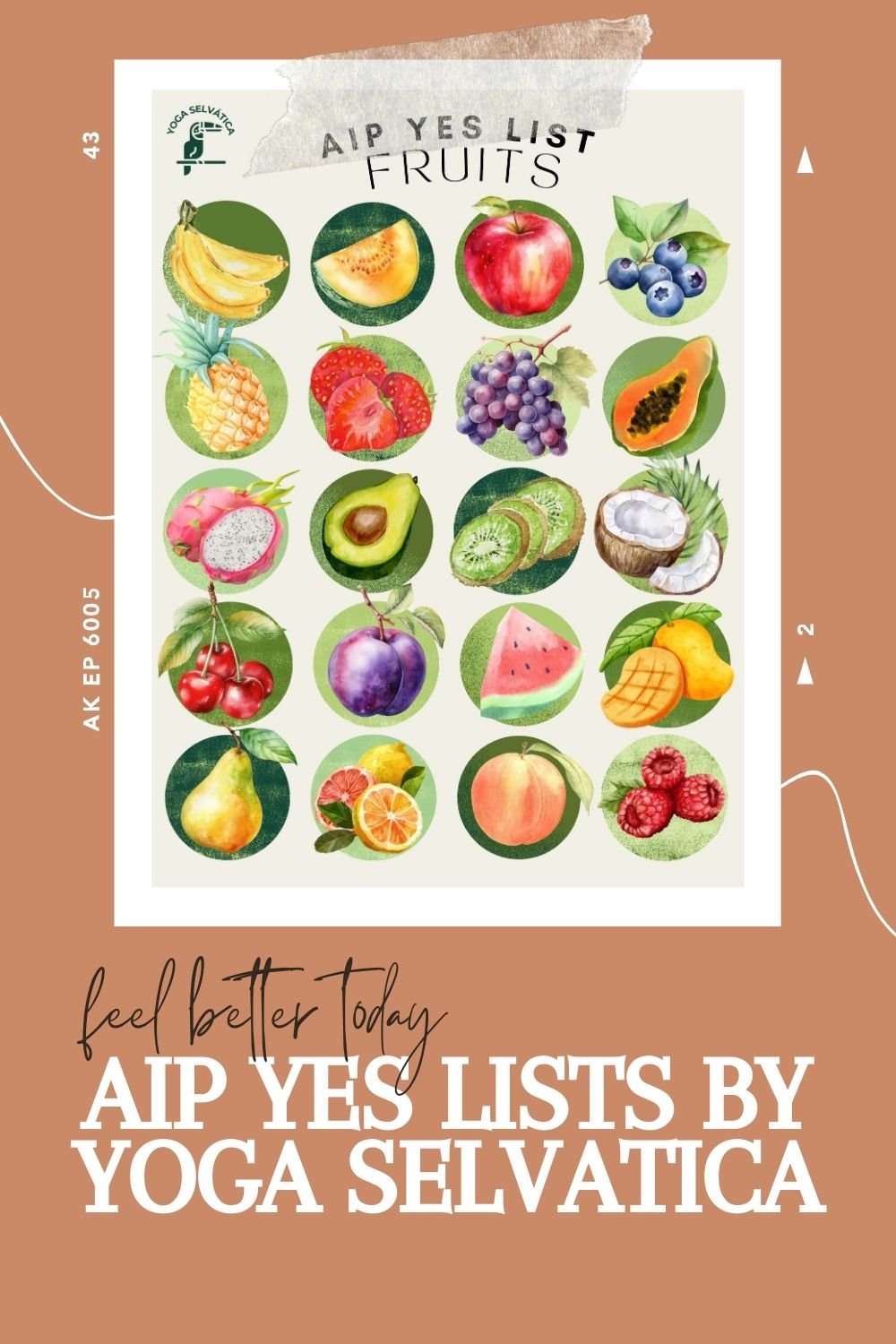
fruits,
vegetables,
root veggies,
leafy greens,
meats,
seafood,
herbs & spices, and
mushrooms & more.
Notice there are three lists completely dedicated to vegetables of different forms. This speaks to the actual richness of variety included in the AIP diet, rather than the deprivation of all the elimination that takes place.
AIP Yes List Bonus Info Sheets
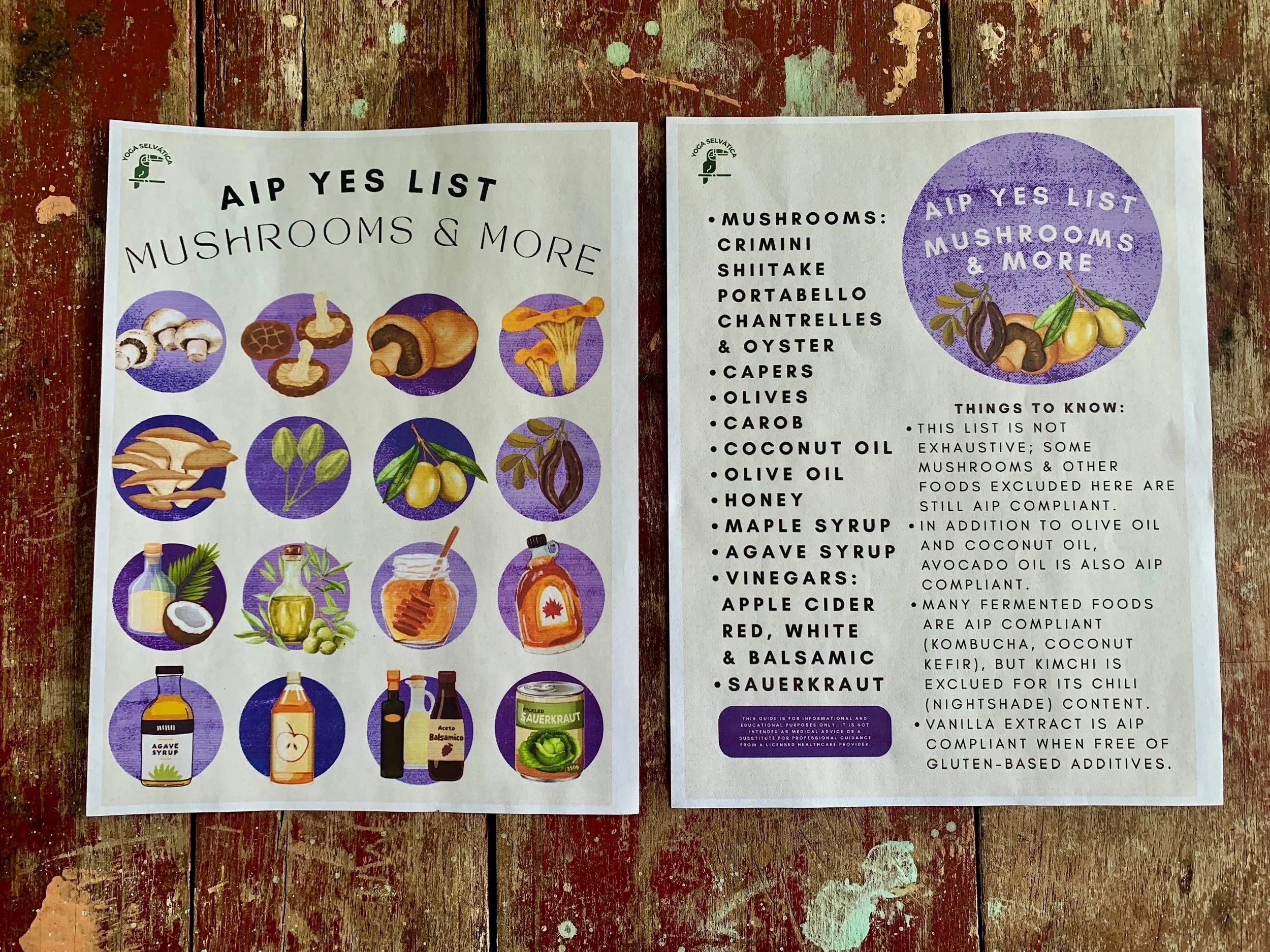
The Bonus Info Sheets that come with each AIP Yes List provides useful information that can help clear up common doubts and uncertainties associated with the AIP diet.
It is important to note that neither the Yes Lists nor the Bonus Info Sheets are exhaustive. This means that not every AIP-compliant food is represented on the Yes Lists, but rather that the lists focus on the most common AIP friendly foods and those that can be found in most contexts of accessibility. A couple of items listed may not be generally available everywhere, like dragonfruit, but may be available in the context in which this blog is written, the Caribbean.
Still, the lists are designed to be standard enough that most items featured will be able to be accessed most places around the world. The Bonus Info Sheets are important to review as they clarify information about each list and category that may provide more confidence and understanding about the AIP diet as you begin your journey with it.
For example, while no nightshades are featured on the Yes Lists, the Bonus Info Sheet re-iterates this by explicitly stating that nightshades, like tomatoes, are not AIP compliant. Another example is the Bonus Info Sheet for herbs & spices, which highlights that while cilantro (leaf) is an AIP friendly herb, the spice coriander (seed), which is cilantro in seed form, is not AIP-friendly.
Benefits of the AIP Yes Lists
Overall, these Yes Lists offer a comprehensive guide and positive reframe to the AIP diet, with engaging visuals that center on all that is included over all that is eliminated. They can be adjusted to print at any size, even to fit into a wallet or notebook. These Yes Lists are the perfect grocery store or kitchen companion for anyone venturing into the AIP diet and their function will help you feel better sooner, as you navigate the complexities inevitable in making big lifestyle changes.
Uses for AIP Yes Lists
Recipe ingredient replacement
recipe creation
grocery shopping
taking with you to the farmer’s market
meal preparation
a quick way to explain to friend and family what you ARE eating while on AIP
an appealing visual guide to what can be a daunting endeavor
Overall, the AIP Yes Lists are a tool to help you care for yourself and feel better sooner with the AIP diet. They are designed to help you maintain a positive mindset while navigating the AIP diet, which can help reduce the stress and decision fatigue inevitable to making big lifestyle changes.
Why use AIP Yes Lists?
AIP Yes Lists are a simple way to remind yourself what you can eat without hurting. They are more approachable and softer on the nervous system that all the (very) long lists out there that tell you everything you “can’t” have or need to stay away from.
AIP Yes Lists keep in mind the AIP Diet practitioner and function to help you succeed on the AIP diet by centering included foods over excluded foods.
Take them along with you, printed or on your phone, to the grocery store or farmer’s market, and practice only buying foods that are included on the Yes Lists, instead of using an exclusion list to guide your shopping and feeling that recurring sense of denial and deprivation that comes from focusing on what is eliminated.
Unsure if a food not listed on AIP yes list is AIP-friendly?
A quick internet search or self-recall of the different eliminated foods groups can help you in a pinch.
Overall, after more than two years working with AIP and my own modified AIP (AIP + my successfully reintroduced foods), I believe in its potential to help us heal ourselves and feel better sooner.
It will serve you to stay the course, put in the work and time of educating yourself, and be patient as you begin. As soon as you feel your symptoms start to dissipate, following the diet only gets easier from there. Remember to be forgiving and gentle with yourself, as stress also has potential to trigger autoimmune symptoms. You are not alone and I know you can do it, because I did.
Find your AIP Yes Lists with Bonus Info Sheets on Yoga Selvática’s Etsy here and help yourself feel better today.
With lots of love,
Lex
Useful resources:
What Really Happens When You go Gluten-Free- by Dr. Sara Szal Gottfried
Beginner’s Guide to the Autoimmune Protocol Diet
What to Eat on the Autoimmune Protocol - by Dr. Sarah Ballantyne
